
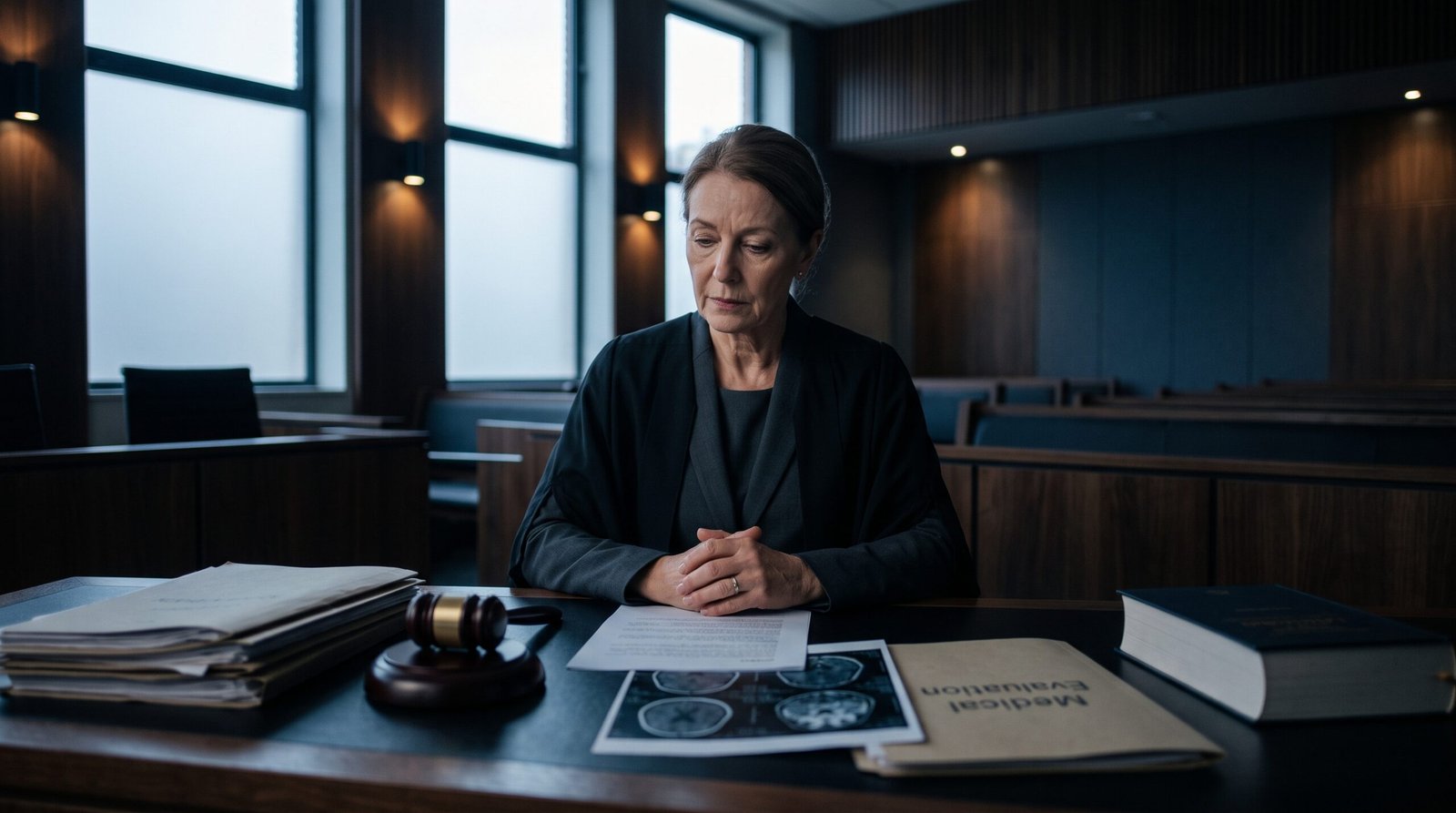
Lindsay Clancy Murder Trial Enters Final Stage as Mental Health Remains Central
The Lindsay Clancy murder trial is moving toward its final stage in Plymouth, Massachusetts, with the defence continuing to argue that severe mental illness made Clancy legally unable to understand the wrongfulness of her actions.
Clancy, 36, has pleaded not guilty to three murder charges stemming from the January 2023 deaths of her children, Cora, 5, Dawson, 3, and Callan, 8 months.
The defence does not dispute that Clancy killed the children. Instead, her lawyers argue that she was suffering from postpartum psychosis and other serious mental health problems at the time. The prosecution maintains that she should be held criminally responsible.
The case has now entered its fourth week, and recent testimony has focused heavily on Clancy’s mental state before and after the killings.
Defense Expert Says Lindsay Clancy Was Not Criminally Responsible
A key moment for the defence came from forensic psychologist Dr Paul Zeizel, who testified that Clancy’s mental illnesses affected her ability to understand that her actions were wrong.
According to the Associated Press, Zeizel said Clancy suffered from bipolar disorder and postpartum psychosis. In his assessment, those conditions left her unable to fully appreciate the wrongfulness of what she was doing or control her behaviour in accordance with the law.
The prosecution challenged that assessment during questioning. Prosecutors raised questions about Clancy’s behaviour and the evidence supporting the diagnosis.
The disagreement highlights the central legal question for jurors: Was Clancy criminally responsible for the killings despite her documented mental health problems?
What Happened to Clancy’s Three Children?
The case concerns the deaths of Clancy’s three children at the family’s Duxbury home on Jan. 24, 2023.
Cora and Dawson were 5 and 3 years old. Their youngest brother, Callan, was 8 months old.
Clancy’s husband, Patrick Clancy, had left the home briefly to run errands. When he returned, he found the children unresponsive and Clancy seriously injured after an apparent suicide attempt.
Clancy survived the attempt but suffered paralysis after jumping from a second-storey window.
Her defence has acknowledged that she caused the children’s deaths. The dispute at trial is therefore centred largely on her state of mind and whether that mental state meets the legal standard for a lack of criminal responsibility.
Defense Points to a Serious Mental Health Decline
Throughout the trial, defence witnesses have described a significant deterioration in Clancy’s mental health during the months before the deaths.
Her family previously testified about suicidal thoughts, fears of harming her children and changes in her behaviour. Her mother, Paula Musgrove, and sister, Allison Osga, described concerns about Clancy’s worsening condition.
The defence has also focused on the medications Clancy was taking and whether her treatment contributed to her deteriorating mental state.
Another defence expert, psychiatrist Dr Donald Condie, criticised aspects of the medical care Clancy received. He described her medical records as limited and questioned why certain testing had not been completed.
The prosecution, however, has presented evidence that it says points toward deliberate conduct.
Digital Evidence Also Became Important in the Trial
The prosecution presented digital evidence from Clancy’s phone and Apple Watch.
A digital forensics expert testified about searches Clancy made before the killings. Those searches included questions involving depression treatment, suicidal thoughts and postpartum psychosis.
The prosecution also highlighted health data from her devices, including recorded movement on the day of the killings.
The defence has offered its own interpretation of the evidence, arguing that the digital records need to be considered alongside Clancy’s broader psychiatric history rather than viewed in isolation.
Chaplain Gives Testimony as Defense Case Continues
On Thursday, Aug. 20, hospital chaplain Sheila Cavanaugh became the latest defence witness.
After roughly an hour of testimony, Judge William Sullivan sent jurors home for the day. Attorneys then took part in discussions about possible jury instructions as the trial moved closer to its conclusion.
The shortened courtroom session followed another unusual development earlier in the week, when jurors were dismissed because of what the judge described as an “unforeseen circumstance”.
The judge has instructed jurors not to speculate about developments surrounding the proceedings.
Hundreds Gather Outside Courthouse in Support of Clancy
The trial has also generated significant public attention outside the courtroom.
On Aug. 20, hundreds of supporters gathered outside the Plymouth courthouse. Many wore pink clothing and carried messages supporting Clancy and raising awareness about maternal mental health.
The demonstrations reflect the broader discussion surrounding postpartum mental illness and the challenges of recognising severe psychiatric symptoms after childbirth.
However, public support does not determine the legal outcome. That decision rests with the court and jury based on the evidence presented at trial.
What Happens Next in the Lindsay Clancy Trial?
The defence is nearing the end of its presentation. Recent reports indicate that the case could soon move toward closing arguments.
Once both sides finish presenting evidence, the judge will provide legal instructions to the jury. Jurors will then consider whether prosecutors have established criminal responsibility under Massachusetts law.
The possible outcomes depend on the jury’s findings. If Clancy is convicted of first-degree murder, she faces life imprisonment without parole. A finding that she was not criminally responsible because of mental illness would lead to psychiatric commitment rather than a conventional prison sentence.
For now, no verdict has been reached.
Why the Lindsay Clancy Case Matters
Beyond the criminal charges, the trial has become a major public discussion about postpartum psychosis, maternal mental health and access to psychiatric care.
Postpartum psychosis is rare but can be a serious psychiatric emergency. The Clancy case has drawn attention to how difficult it can be to identify severe symptoms and how mental illness can intersect with questions of criminal responsibility.
At trial, however, the issue is not simply whether Clancy experienced mental health problems. Jurors must determine how those conditions affected her legal responsibility at the time of the killings.
That distinction is at the heart of the case.