
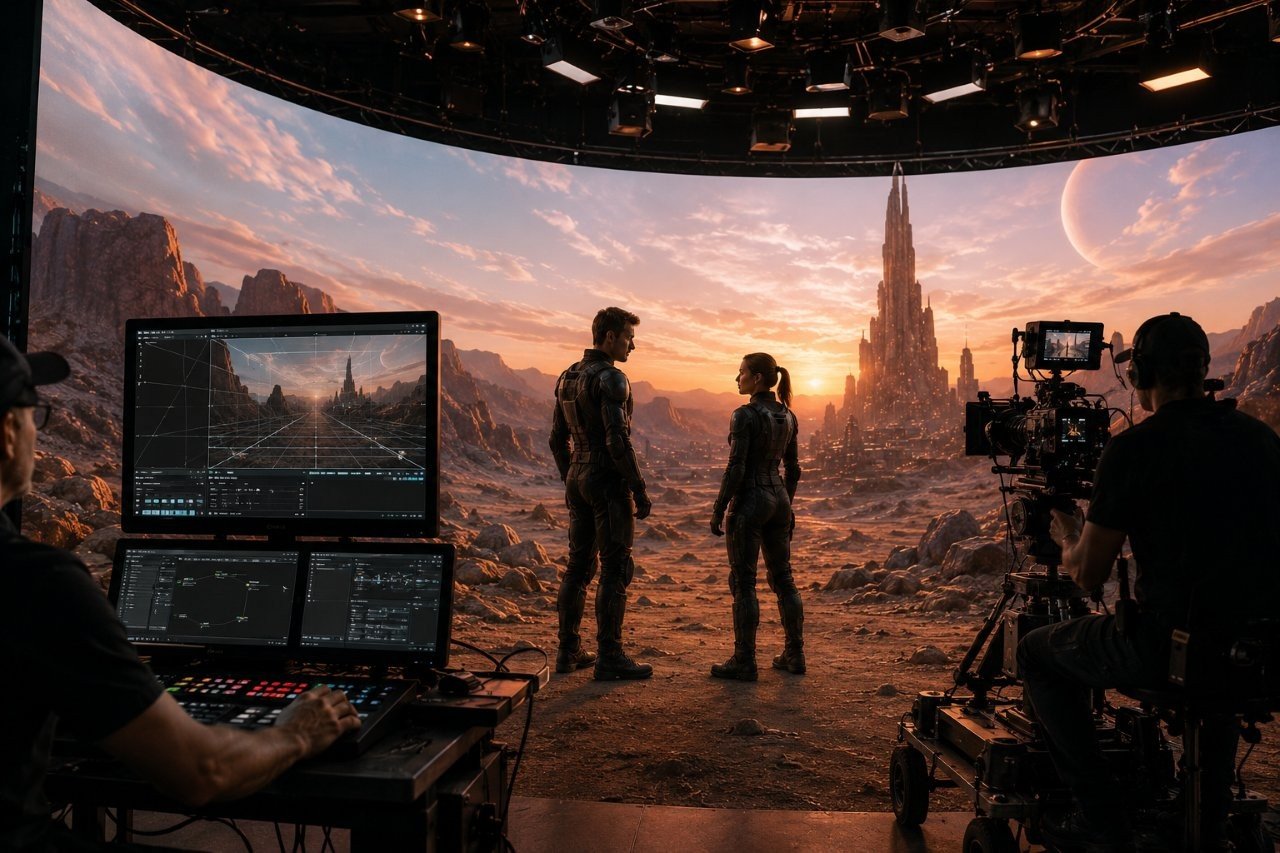
How AI CGI and Virtual Sets Are Changing Hollywood Filmmaking
Hollywood is undergoing a technological renaissance that is fundamental redefining how stories are brought from script to screen. The traditional filmmaking pipeline—characterized by massive physical set builds, extensive location travel, and months of post-production visual effects rendering—is giving way to real-time production environments powered by high-powered artificial intelligence, real-time engines, and LED Volume stages.
As studios demand higher visual fidelity while seeking to optimize ballooning production budgets, virtual production and AI-driven graphics are becoming indispensable tools for modern filmmakers. Here is an in-depth exploration of how virtual sets, generative tools, and real-time visual effects are altering the landscape of blockbuster movie creation in 2026 and beyond.
The Evolution from Green Screens to LED Volumes
For decades, green and blue screens served as the primary bridge between actors and fictional environments. However, traditional chroma keying presented major creative challenges, including unnatural lighting spills, reflective surface complications, and actors performing against blank, non-responsive backgrounds.
Key Advantages of Real-Time LED Virtual Production
- In-Camera Visual Effects (ICVFX): Photorealistic 3D environments rendered in real time on high-resolution LED walls allow cameras to capture final background imagery directly during principal photography.
- Interactive Environment Lighting: The glowing LED panels cast realistic, natural light and physical reflections directly onto actors, costumes, and physical props, eliminating tedious post-production light matching.
- Enhanced Performance Dynamics: Directors and actors can see, react to, and interact with the exact digital landscapes live on set, dramatically boosting emotional realism and scene immersion.
Industry analysis from The Hollywood Reporter demonstrates how major production hubs worldwide are constructing permanent LED Volume infrastructure to streamline cinematic production cycles.
How Machine Learning and Generative AI Accelerate Post-Production
While physical volume stages handle onset visual capture, advanced machine learning models are fundamentally accelerating post-production workflows. Visual effects artists are using specialized AI assistants to handle repetitive technical tasks, freeing up visual creative teams to focus on artistic direction.
Operational Efficiency Breakthroughs
- Automated Rotoscoping and Matting: What used to take VFX artists weeks of manual frame-by-frame isolation can now be executed in minutes through high-precision machine-learning segmentation algorithms.
- Predictive Pre-Visualization: Directors can convert rough storyboards into dynamically lit 3D animatics instantaneously, allowing crews to test framing, lens choice, and pacing prior to shooting a single shot.
- Advanced Face-Aging and De-Aging: Generative models synthesize neural texture maps directly onto talent footage, rendering hyper-accurate aging or de-aging effects with natural muscular expressions.
Coverage on entertainment technology platforms like Variety highlights how major studios are leveraging generative pipelines to decrease post-production turnarounds while maintaining cinematic standards.
Democratizing High-End Filmmaking and Lowering Cost Barriers
Historically, constructing fantastical worlds or setting scenes in distant global cities required multi-hundred-million-dollar budgets accessible only to major tentpole studios. Virtual production technology is leveling the playing field for independent production houses and mid-tier directors.
Impact on Independent Cinema
- Localized Global Shooting: Filmmakers can capture scenes set across multiple continents within a single studio soundstage, drastically cutting international travel and permits.
- Consistent Golden Hour Lighting: Digital environments allow directors to lock virtual lighting conditions—such as a specific sunset angle—for hours at a time, eliminating weather delays.
- Sustainable Set Construction: Reducing physical set construction decreases lumber, plastic, and logistical waste, establishing environmentally friendly production practices.
The Future Horizon of Cinematic Storytelling
As real-time graphics engines and artificial intelligence tools continue to mature, the boundary between live-action filmmaking and digital creation will blur entirely. Rather than replacing human artistry, these advanced tools serve as powerful creative accelerators, granting directors unprecedented freedom to materialize ambitious visual concepts.
The future of Hollywood cinema lies in the seamless synthesis of human narrative craftsmanship and dynamic real-time technology. As virtual sets become faster, smarter, and universally accessible, audiences can look forward to richer, visually spectacular stories that push the absolute boundaries of imagination.