
The Evolution of Binge Watching and Weekly Releases
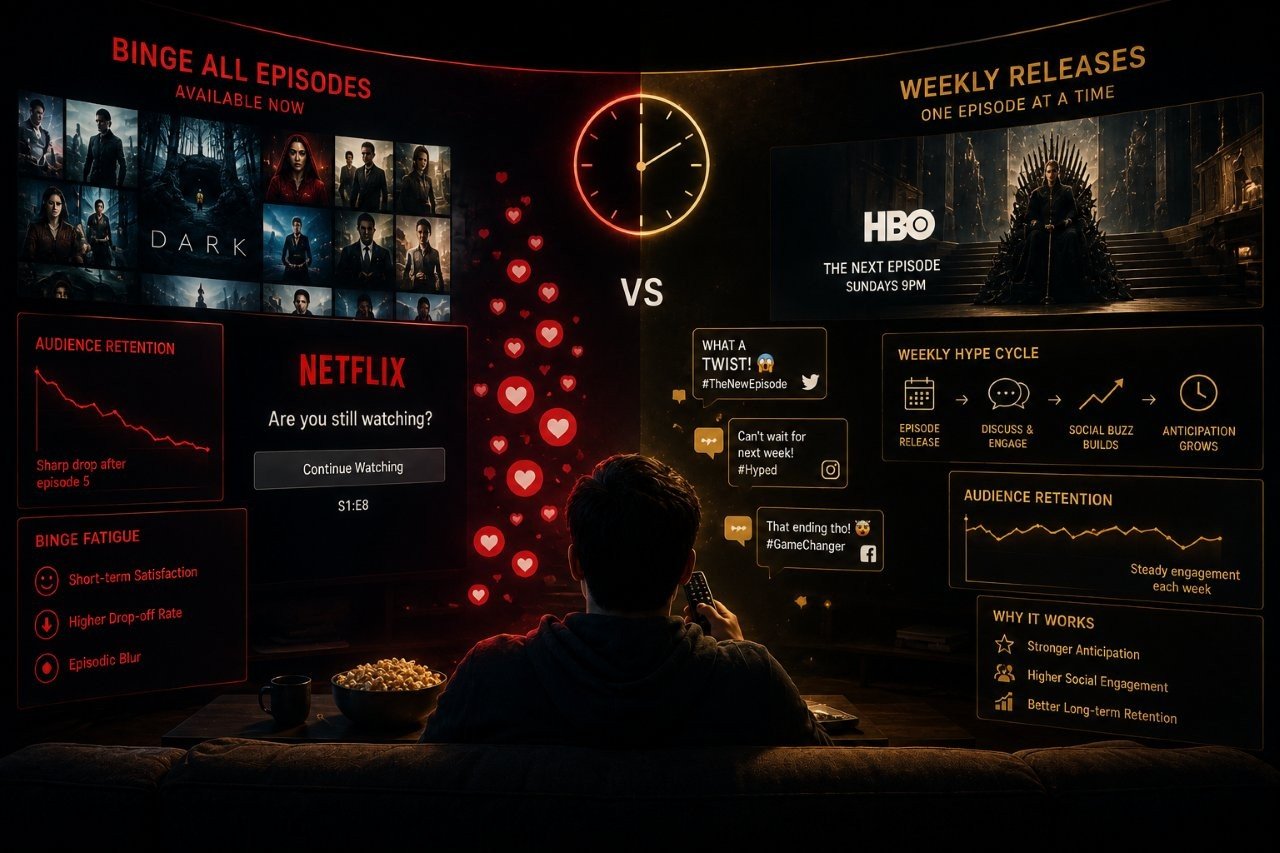
The debate between releasing an entire season at once and dropping episodes on a traditional weekly schedule has reshaped the television landscape. As streaming services fight for viewer retention and sustained media attention, release strategies have become a crucial component of platform survival.
The all-at-once binge model revolutionized consumer habits by offering instant gratification. However, platforms are increasingly returning to weekly drops or split-season rollouts to extend cultural momentum, maximize social media chatter, and control subscriber churn.
The Binge Model and Instant Gratification
When platforms popularized all-at-once releases, they transformed how audiences engage with narrative television. Entire seasons could be consumed in a single weekend, creating intense short-term hype and allowing viewers to dictate their own consumption pace.
Key Drivers of Binge Consumption
- Uninterrupted Storytelling: Seamless cliffhangers encourage viewers to watch consecutive episodes without waiting.
- Consumer Autonomy: Audiences maintain complete control over their viewing schedule without linear broadcast limits.
- Immediate High-Impact Hype: Complete releases create massive spike events on social media immediately upon release.
The Case for Weekly Episode Releases
Weekly releases build long-term momentum. By spreading a show over two to three months, platforms give audiences time to digest events, construct fan theories, and generate organic discussion across online communities.
Advantages of the Weekly Distribution Schedule
- Extended Subscriber Retention: Spreading episodes across multiple months prevents subscribers from canceling immediately after finishing a show.
- Sustained Social Media Hype: Weekly drops generate repeating cycles of speculation, trending topics, and recaps.
- Shared Cultural Moments: Synchronized release schedules foster collective viewing experiences that bring audiences together.
Binge Fatigue and Hybrid Drop Models
Consumer behavior is shifting due to binge fatigue. Watching hours of content continuously can lead to burnout and make individual episodes feel disposable. To balance instant access with long-term engagement, platforms are increasingly adopting hybrid release schedules.
Popular Hybrid Distribution Approaches
- Multi-Episode Premiere Drops: Releasing the first three episodes together to hook viewers, followed by weekly single episodes.
- Volume and Batch Splits: Dividing a season into two distinct parts released a few weeks or months apart.
- Weekend Event Staggering: Releasing batches of episodes across consecutive weekends to create concentrated viewing windows.
The Future of Streaming Release Strategies
There is no longer a single dominant release format for digital television. Distribution schedules are tailored specifically to match genre demands, budget scales, and audience habits to achieve optimal engagement and long-term value.