
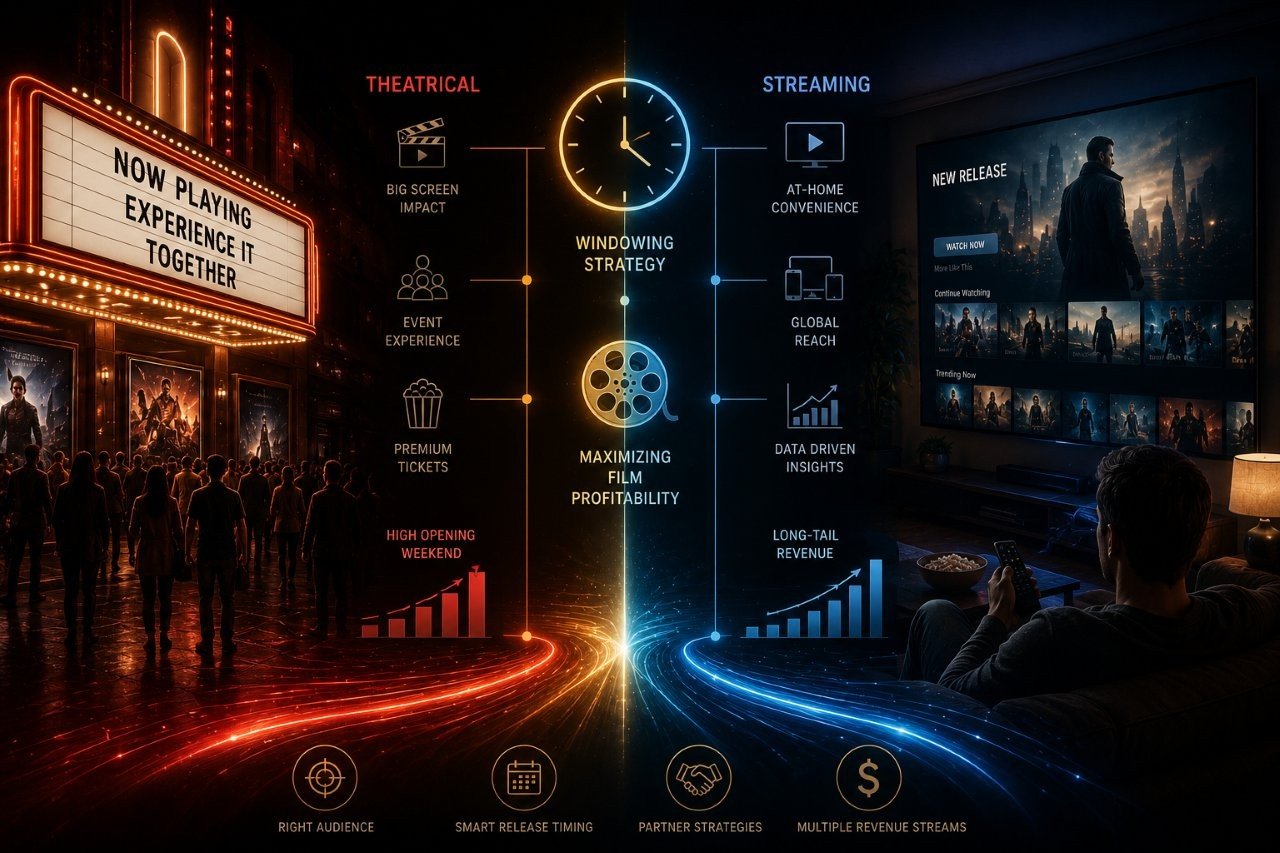
Direct-to-Streaming vs. Theatrical Windows: The New Economics of Movie Distribution
The traditional 90-day theatrical window—once the undisputed backbone of Hollywood’s release strategy—has been permanently restructured. Today, studio distribution models rely on dynamic release frameworks designed to balance box office ticket sales with subscription video-on-demand (SVOD) growth and premium digital rentals (PVOD). In 2026, movie distribution is no longer a one-size-fits-all formula, but a tailored financial calculation optimized for every individual film.
As entertainment conglomerates prioritize overall profitability over raw streaming subscriber counts, understanding the intersection of theatrical exclusivity and digital availability is critical. Here is an in-depth analysis of how hybrid release strategies, variable windowing models, and multi-tier monetization are driving the new economics of film distribution.
The Shift to Dynamic and Tiered Windowing
The post-streaming wars era has established a pragmatic approach to theatrical exclusivity. Instead of enforcing rigid multi-month delays or rushing day-and-date digital releases, major studios employ flexible windowing tiers based on a film’s opening weekend box office performance.
How the Modern Windowing Tier System Works
- Tentpole Exclusivity (45 to 75 Days): High-budget blockbusters, franchise sequels, and visual spectacles retain long exclusive theatrical windows to maximize global ticket revenue.
- Mid-Tier Dynamic Windows (17 to 31 Days): Mid-budget dramas, comedies, and horror films transition into Premium Video-On-Demand (PVOD) within weeks if initial box office velocity slows down.
- Direct-to-Digital Precision Releases: Niche genres and indie acquisitions bypass wide theatrical runs entirely, saving tens of millions in print and advertising (P&A) costs.
Market studies published on Screen Daily demonstrate that dynamic windowing allows studios to capture theatrical revenue while capitalizing on fresh marketing awareness for home digital purchases.
The Real Value of the Theatrical Engine
While direct-to-streaming content provides convenience for subscribers, studio accounting has repeatedly proven that theatrical releases serve as a vital marketing amplifier for long-term IP valuation. A strong box office run establishes prestige, raises cultural awareness, and significantly boosts subsequent streaming viewership.
Why Theatrical Releases Boost Downstream Value
- Higher Per-Viewer Monetization: Box office ticket sales generate immediate upfront revenue per user that subscription fees cannot match.
- Perceived Content Prestige: Audiences routinely view theatrical films as higher quality compared to unpromoted streaming originals.
- Secondary Revenue Streams: Strong theatrical visibility drives licensing deals, physical media sales, international broadcast rights, and consumer product tie-ins.
Financial analysis featured on The Business of Fashion confirms that theatrical releases provide an essential halo effect that sustains consumer interest across secondary digital markets.
Maximizing Profitability in the Multi-Platform Era
The ultimate goal for modern studio distributors is constructing a seamless monetization waterfall. By staggering releases across theatrical, PVOD rental, home video, exclusive subscription streaming, and third-party licensing, studios capture maximum value at every price point.
The Monetization Waterfall Sequence
- Stage 1: Theatrical Exhibition: High-margin revenue generated through worldwide box office performance.
- Stage 2: PVOD & Digital Purchase: Premium digital rentals priced at $19.99 to $24.99 capture high-intent home viewers.
- Stage 3: Exclusive SVOD Window: Premium streaming placement drives platform engagement and subscriber retention.
- Stage 4: Free Ad-Supported Streaming (FAST) & Cable: Long-tail monetization through licensing deals with global networks and ad-supported platforms.
The Future of Film Distribution Economics
The debate between direct-to-streaming and theatrical releases has evolved from a head-to-head rivalry into a unified financial strategy. By utilizing dynamic windowing, protecting theatrical exclusivity for major tentpoles, and leveraging downstream streaming platforms, the film industry has established a sustainable economic model for the future of cinema.