
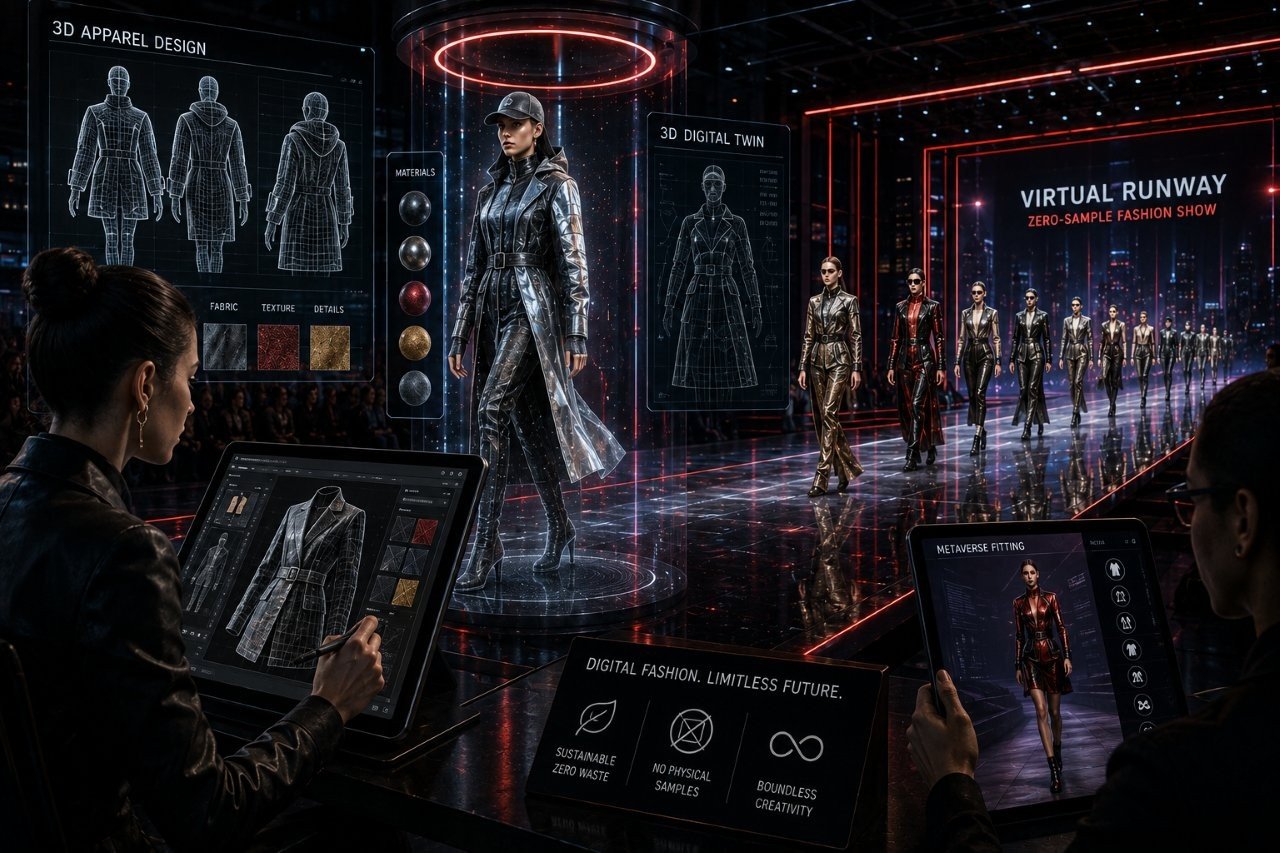
The Evolution of 3D Digital Fashion Twins and Virtual Runways
The fashion industry is undergoing a monumental digital revolution. In 2026, the traditional blueprint of fashion design, sampling, and runway presentation has been fundamentally transformed by hyper-realistic 3D garment visualization, neural rendering, and spatial computing. What began as an experimental trend in gaming skins and metaverse platforms has evolved into the core operational backbone for global luxury houses and indie labels alike.
By creating true 3D digital twins—exact digital replicas of physical garments complete with real-time fabric drape, tension physics, and light interaction—brands are slashing pre-production waste and dramatically accelerating time-to-market. Here is an in-depth analysis of how 3D design, instant virtual fitting rooms, and zero-sample virtual fashion shows are reshaping the global fashion ecosystem.
3D Apparel Design: From Concept to Digital Twin
For decades, physical garment development required 15 to 25 physical sample iterations per style, generating thousands of tons of discarded fabric scraps and massive shipping footprints. Modern 3D apparel design software has replaced this inefficient loop with hyper-accurate virtual prototyping.
The Core Advantages of Virtual Prototyping
- Sub-Millimeter Fabric Simulation: Advanced physics engines simulate real-world textile properties—such as the stiffness of raw denim, the bias-cut drape of silk, or the stretch of technical knits—with photorealistic accuracy.
- Instant Colorway & Pattern Testing: Designers can preview dozens of print placements and Pantone color variations in seconds without ordering physical swatches.
- 80% Reduction in Pre-Production Costs: Cutting physical sample rounds down to a single final confirmation piece slashes development timelines from months to days.
Tech and sustainability coverage on Vogue Business highlights how end-to-end 3D design workflows have become essential for brands meeting global environmental compliance standards.
Metaverse Fittings and Instant AI Virtual Try-Ons
The bridge between 3D digital apparel design and e-commerce conversion is the virtual fitting room. Leveraged by volumetric 3D body scanning and mobile neural rendering, consumers can now audition digital twins directly on personalized digital avatars before hitting “buy”.
How Digital Twins Solve the E-Commerce Return Crisis
- Personalized Avatar Calibration: Users capture a quick 360-degree smartphone video to generate an accurate 3D avatar with precise body measurements.
- Real-Time Tension & Fit Mapping: Heatmaps visually indicate where a garment will feel tight, loose, or pull against the body across different poses and movements.
- Dramatic Drop in Return Rates: By eliminating sizing uncertainty, retailers implementing hyper-realistic virtual try-ons are cutting fit-based returns by up to 50%.
Retailing insights published on The Business of Fashion reveal that interactive virtual fitting features directly boost customer confidence and online conversion rates.
Zero-Sample Fashion Shows and Spatial Runways
The traditional fashion show—involving international flights, physical venue construction, model casting, and high logistics costs—is being complemented and reinvented by virtual runways. Digital fashion presentations allow creative directors to craft unbounded cinematic universes that millions of global viewers can attend simultaneously via web, mobile, or mixed-reality headsets.
Key Features of Virtual Fashion Presentations
- Zero Physical Fabric Waste: Entire collections are designed, styled, and presented digitally without cutting a single yard of fabric.
- Gravity-Defying Scenography: Digital runways allow shows to take place under surreal conditions—underwater, in deep space, or within architectural fantasy worlds that would be impossible in physical space.
- Direct-to-Avatar Purchases: Audiences watching virtual runways can instantly purchase digital garments for their online avatars or pre-order physical garments for real-life delivery.
The Future Synergy of Digital and Physical Fashion
Rather than replacing physical clothing, 3D digital twins and virtual runways are amplifying the physical fashion experience. By validating demand through digital collections before manufacturing begins, brands are achieving true zero-waste, on-demand production.
As mixed-reality eyewear and AI body mapping become part of daily life, 3D apparel assets will serve as universal wardrobe extensions—defining both our physical style and our online identity in the digital era.