
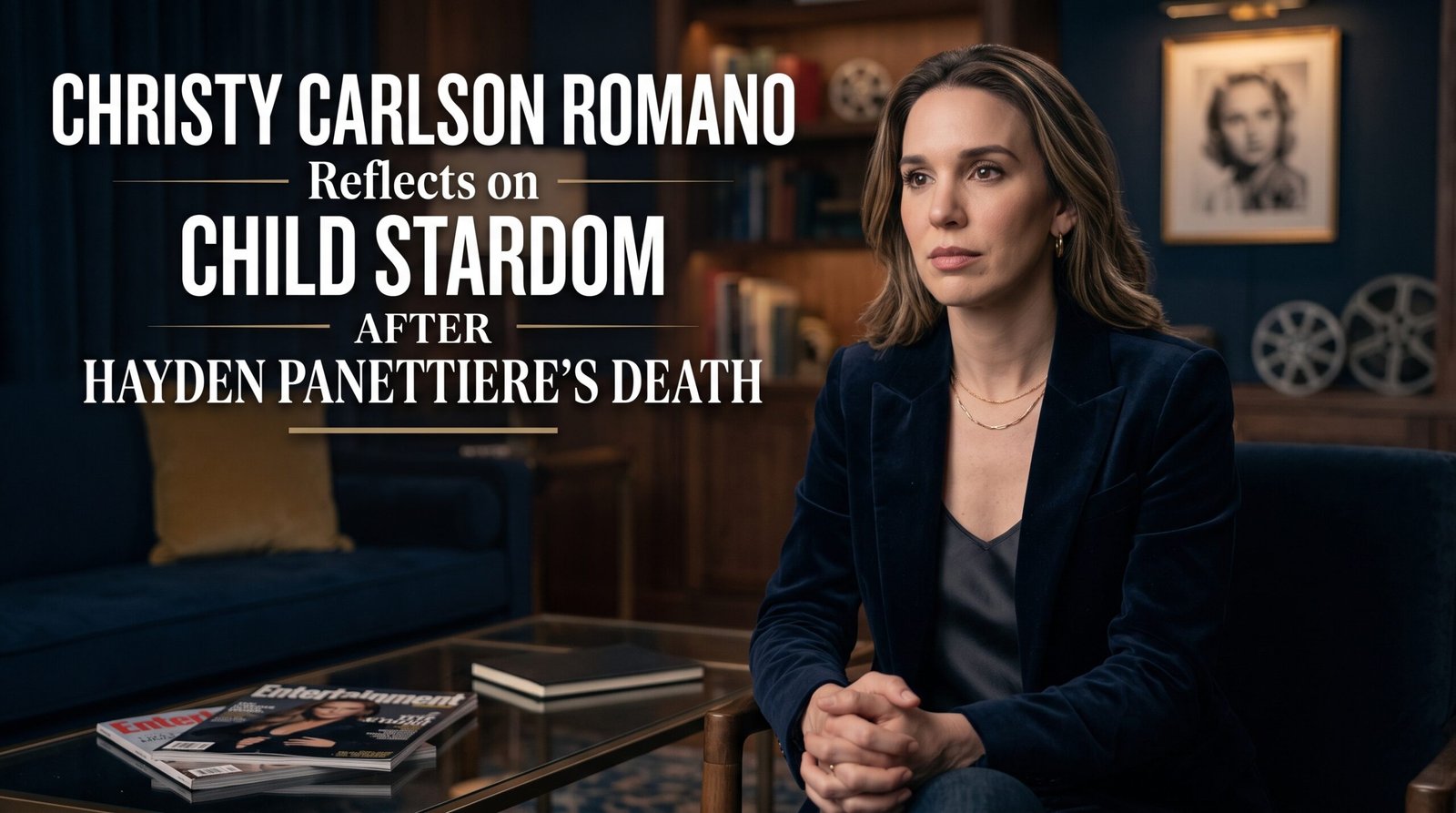
Christy Carlson Romano Links Child Stardom to Lasting Emotional Impact After Hayden Panettiere’s Death
Christy Carlson Romano is reflecting on the long-term effects of growing up in Hollywood following the death of fellow former child actor Hayden Panettiere.
In a personal essay published by ELLE on Aug. 18, Romano described early fame as similar to chronic traumatic encephalopathy, or CTE. She stressed that she was not describing a medical diagnosis but using CTE as a comparison for the repeated emotional impact that can come with childhood fame.
Her comments come days after Panettiere died at age 36 in Greenville, South Carolina. The actress was found unresponsive and in cardiac arrest on Aug. 16. The Greenville County Coroner’s Office has said that an autopsy found no signs of trauma, while the official cause and manner of death remain pending further investigation and additional testing.
Christy Carlson Romano Says Childhood Fame Can Leave a Lasting Mark
Romano, best known for Even Stevens and Kim Possible, drew attention to the difference between how society understands physical risks for young athletes and how it handles the pressures faced by young performers.
She argued that child actors can experience repeated rejection, public scrutiny, professional pressure and a loss of privacy while they are still developing emotionally.
According to Romano, those experiences can continue to affect former child performers long after their time in the spotlight.
Her argument is not that childhood acting causes a specific medical condition. Instead, she is calling attention to what she sees as an under-discussed psychological cost of becoming famous at a young age.
The Pressure of Growing Up in Hollywood
Romano also pointed to the unusual position child actors occupy within the entertainment industry.
Young performers may be treated as children when adults want to protect them. At the same time, they can be expected to work like professionals when their careers generate money and attention.
That tension can become difficult when a former child star grows older.
Romano questioned whether the entertainment industry and wider culture do enough to support young performers after their childhood fame fades. She also argued that adults surrounding child actors can sometimes shift responsibility when those performers struggle later in life.
Her essay suggests that former child actors should not automatically be viewed as people who had an easy childhood simply because they were successful or appeared happy in public.
Hayden Panettiere’s Death Brings the Issue Into Focus
Panettiere’s death has renewed discussion about the pressures faced by people who enter the entertainment industry as children.
She began working as a performer during infancy and built a career across television and film. Her later work included major roles in Heroes and Nashville, while her film credits included Remember the Titans, Ice Princess and Scream 4.
Panettiere also spoke publicly about difficult periods in her life, including addiction and mental health struggles. Her memoir, This Is Me: A Reckoning, was released in 2026 and discussed several of those personal experiences.
However, officials have not established that her childhood career or early fame caused her death.
That distinction is important. Romano’s comments raise a broader conversation about child stardom, rather than providing an explanation for Panettiere’s death.
What Officials Have Confirmed About Panettiere’s Death
Panettiere was found unresponsive at a residence in Greenville on Aug. 16. Emergency responders attempted lifesaving measures, but she was pronounced dead at 2:32 p.m., according to the Greenville County Coroner’s Office.
An autopsy was completed the following day and found no signs of trauma that contributed to her death. However, the coroner’s office said the official cause and manner of death were still pending further investigation and additional studies.
Police have also said the preliminary investigation has not indicated signs of foul play or suspicious circumstances.
Because the investigation remains ongoing, reports about a possible overdose should not be treated as a confirmed cause of death.
Romano Says Former Child Stars Need More Understanding
Romano’s comments reflect a larger conversation about what happens after child performers leave the spotlight.
For audiences, childhood fame can look glamorous. Yet young actors also face auditions, rejection, demanding work schedules, media attention and expectations that may be difficult to process while growing up.
Romano’s central argument is that success during childhood does not necessarily mean someone escaped those pressures without lasting effects.
She also emphasised that access to professional support is not the same for every former child performer.
Hollywood Continues to Remember Hayden Panettiere
Panettiere’s death has prompted tributes from former co-stars, friends and fellow entertainers.
People who worked with her have remembered her talent, personality and impact during her years in television and film. Her death has also brought renewed attention to the complicated experience of growing up in the public eye.
For Romano, Panettiere’s passing became a moment to reflect on her own experience as a child performer and on the challenges that can follow young actors into adulthood.
Rather than treating former child stars only as celebrities, her essay asks audiences to consider the people behind the public image and the pressures they may have experienced away from the cameras.
Why the Conversation About Child Stars Matters
The discussion is bigger than one celebrity or one Hollywood generation.
Child performers depend on adults to help protect their education, privacy, finances and emotional well-being. As they become adults, they also have to build identities beyond the characters audiences knew when they were young.
Romano’s reflection highlights the importance of taking those transitions seriously.
At the same time, Panettiere’s death remains an active investigation. Any connection between her childhood career, personal struggles and the circumstances of her death would require evidence from authorities and should not be assumed.
For now, Romano’s message is about awareness: childhood fame can have complicated consequences, and former child performers deserve understanding rather than judgement when they struggle later in life.