
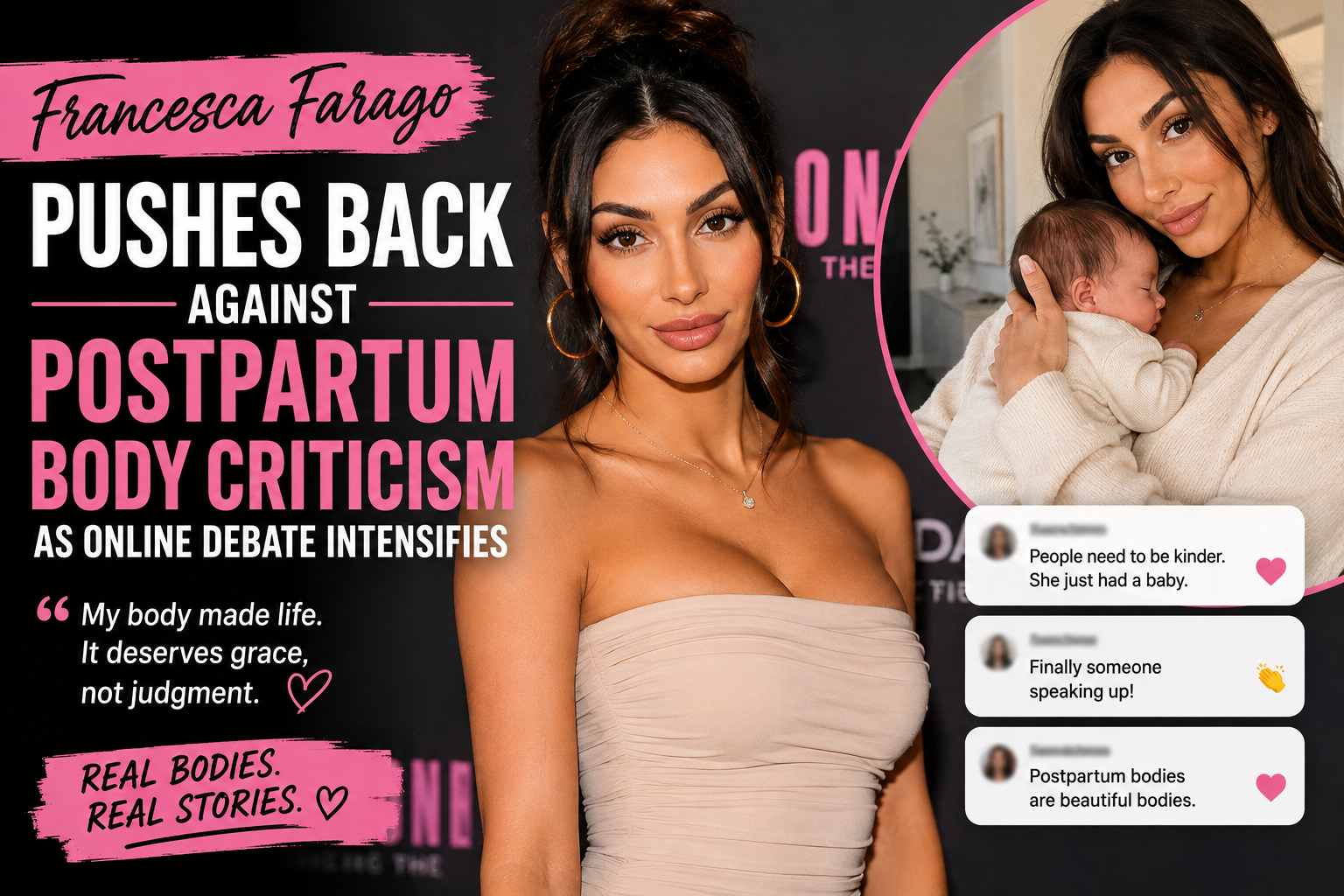
Francesca Farago Responds to Postpartum Body Criticism and Eating Disorder Claims
Francesca Farago has responded to criticism surrounding her postpartum body after welcoming twins in November 2024. The Too Hot to Handle alum addressed accusations that her social media posts promote eating disorders, saying she is simply living her life and existing in her body.
Farago, 32, spoke about the criticism in a TikTok video shared on August 13, 2026. The video showed her spending time outdoors with her twins, Locket and Poetry.
Francesca Farago Pushes Back Against Body-Shaming Comments
Farago’s latest response came after commenters criticised her appearance and raised concerns about the message her posts could send to younger viewers.
One commenter accused her of using the postpartum label as a reason to display what they described as an eating disorder. Farago rejected that claim.
She explained that she is not providing weight-loss advice or encouraging an eating disorder. Instead, she said her posts simply show her everyday life.
Her response also challenged the idea that women should have to meet a particular body standard before appearing publicly.
The reality star’s comments come amid continuing conversations about postpartum bodies and the pressure women can face on social media.
Farago Became a Mother to Twins in 2024
Farago and her fiancé, Jesse Sullivan, welcomed fraternal twins on November 11, 2024.
The couple’s son is named Locket Romance Sullivan, while their daughter is Poetry Lucia Sullivan. Farago previously revealed that the twins arrived through an emergency C-section at 36 weeks and five days.
The babies were born only two minutes apart. Locket arrived at 7:31 a.m., followed by Poetry at 7:33 a.m., according to details shared by the couple at the time.
Their arrival marked a major change in Farago’s life as she adjusted to motherhood while also remaining active on social media.
The reality star has addressed body comments before.
This is not the first time Farago has spoken about comments regarding her appearance.
In July, she shared another TikTok in which she wore a sweatshirt and sweatpants while dancing at home. The post referenced the criticism she had received about her body and how she should dress online.
Farago also previously discussed how tired she was while caring for her young children. She said at the time that she had not been sleeping properly and described the demands of motherhood as exhausting.
Her latest comments again place the focus on the reality of postpartum life rather than on expectations about how a mother should look.
Why Farago’s Response Has Sparked Discussion
Celebrity bodies are frequently scrutinised on social media, and postpartum celebrities can face particularly intense expectations about how quickly their bodies should change after childbirth.
At the same time, concerns about eating disorders are serious. However, an individual’s appearance alone cannot establish whether that person has an eating disorder.
Farago’s response specifically disputed the accusation directed at her. She said she was not posting weight-loss tips or presenting her content as advice for others.
That distinction is important when discussing sensitive subjects such as eating disorders. Social media users may express concern about potentially harmful content, but assumptions about another person’s health based solely on appearance can also be harmful.
Francesca Farago Continues to Share Life as a Mom
Farago has continued sharing parts of her family life online since becoming a mother.
Her latest TikTok featured her with Locket and Poetry rather than focusing solely on her appearance. The response to the post, however, quickly shifted toward discussion of her body and whether her content was appropriate.
Farago pushed back against that conversation and argued that postpartum women should not be expected to maintain a particular body size in order to participate publicly online.
Supportive followers also defended the reality star in the comments, encouraging her to ignore negative remarks and continue living her life.
What Francesca Farago Said About the Controversy
The central point of Farago’s response was that appearing in her own body is not the same as promoting an eating disorder.
She also made clear that she does not believe being postpartum should automatically prevent women from sharing their lives online.
Her comments have added to a broader discussion about body image, motherhood and the way social media users talk about women’s appearances.
For Farago, the issue appears to be less about changing the conversation around her body and more about asking people to stop making assumptions about it.