
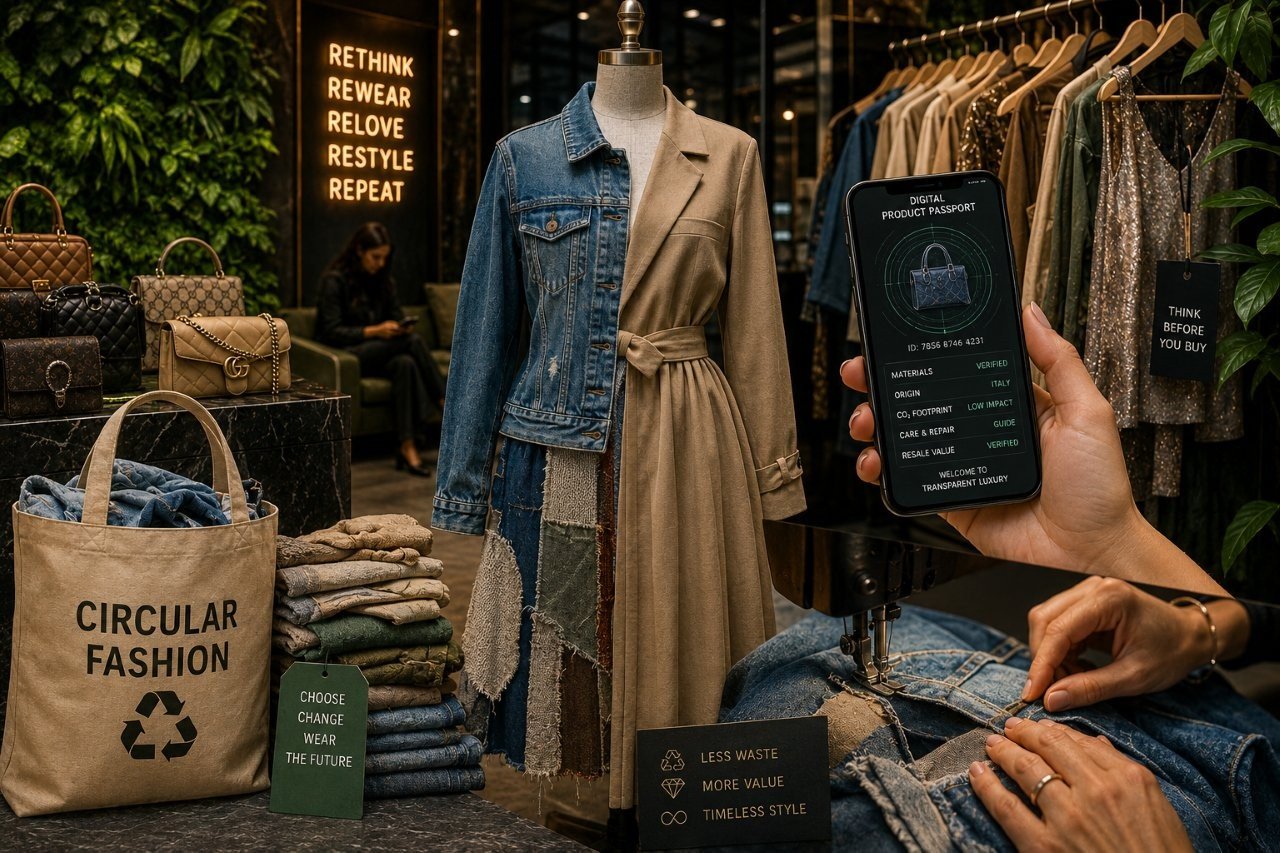
The Rise of Circular Fashion and Upcycled Luxury
The global luxury industry is undergoing a profound paradigm shift. In 2026, the traditional linear model of “take, make, and waste” is being rapidly replaced by a sophisticated circular economy. Modern luxury consumers no longer judge exclusivity solely by high price tags or rare materials; true prestige now lies in environmental responsibility, material longevity, and zero-waste craftsmanship. From iconic heritage houses to radical indie ateliers, brands are proving that sustainability and high-end elegance can seamlessly coexist.
As regulatory frameworks tighten worldwide and eco-conscious shoppers demand absolute transparency, circular fashion has evolved from a niche movement into the primary growth driver for the global luxury sector. Here is an in-depth exploration of how upcycling, digital compliance, and second-hand luxury are defining the future of high fashion.
The Upcycled Luxury Revolution: Transforming Waste into Haute Couture
Upcycling has officially graduated from DIY craft to haute couture runways. Renowned creative directors are reimagining deadstock fabrics, vintage archive garments, and industrial offcuts into one-of-a-kind statement pieces that command premium market value.
Why Upcycled Luxury Is Dominating High Fashion
- Unmatched Exclusivity: Upcycled garments are inherently unique. Because they are constructed from limited leftover textiles, every piece carries a singular story and distinct character.
- Drastic Carbon Reduction: Eliminating the need for raw material extraction significantly lowers carbon emissions and conserves thousands of liters of water per garment.
- Elevated Craftsmanship: Reconstructing existing garments requires advanced tailoring expertise, highlighting the artisan skills that define true luxury houses.
Industry research published by the Ellen MacArthur Foundation demonstrates that transitioning to circular design principles can cut global textile waste by millions of tons annually while opening massive new revenue streams.
Digital Product Passports: Absolute Transparency in 2026
Transparency is no longer a luxury brand marketing promise—it is a legal and cultural imperative. Led by the European Union’s Ecodesign for Sustainable Products Regulation (ESPR), the rollout of the Digital Product Passport (DPP) has fundamentally changed how consumers interact with luxury apparel.
How Digital Product Passports Work for Consumers
- Scannable Authenticity & Origin: Embedded QR codes or subtle NFC micro-chips allow customers to scan garments with their smartphones to instantly view raw material origin, manufacturing facilities, and labor certifications.
- Lifecycle Impact Tracking: Passports outline a garment’s exact carbon footprint, water usage metrics, and chemical compliance data across its entire supply chain.
- End-of-Life & Repair Access: Scans provide tailored garment care instructions, designated official repair hubs, and verified buyback or recycling channels.
Coverage on Vogue Business highlights how top-tier fashion brands are leveraging digital passports not just for compliance, but as interactive storytelling platforms that build deep consumer trust.
The Exponential Growth of Pre-Owned and Second-Hand Luxury
The stigma around buying pre-owned luxury has completely vanished. High-end resale is now one of the fastest-growing segments in the global fashion ecosystem, powered by digital authentication technologies and brand-led buyback programs.
Key Drivers of the Resale Boom
- Brand-Owned Resale Platforms: Major luxury labels are launching internal trade-in portals, allowing customers to exchange authenticated archival pieces for store credit.
- Investment-Grade Wardrobes: Consumers view iconic handbags, outerwear, and jewelry as appreciating financial assets that retain value over decades.
- AI-Powered Authentication: Advanced machine-learning verification tools ensure that secondhand luxury marketplaces remain free of counterfeit items.
The Zero-Waste Future of Runway and Daily Wear
Looking ahead, zero-waste principles are reshaping every phase of garment creation—from initial 3D pattern drafting to bio-degradable packaging. Designers are utilizing zero-waste cutting algorithms that eliminate fabric scraps entirely during the manufacturing process.
By prioritizing upcycling, embracing digital product transparency, and supporting robust resale markets, circular luxury is establishing a bold new standard: fashion that honors heritage while preserving the planet for generations to come.