
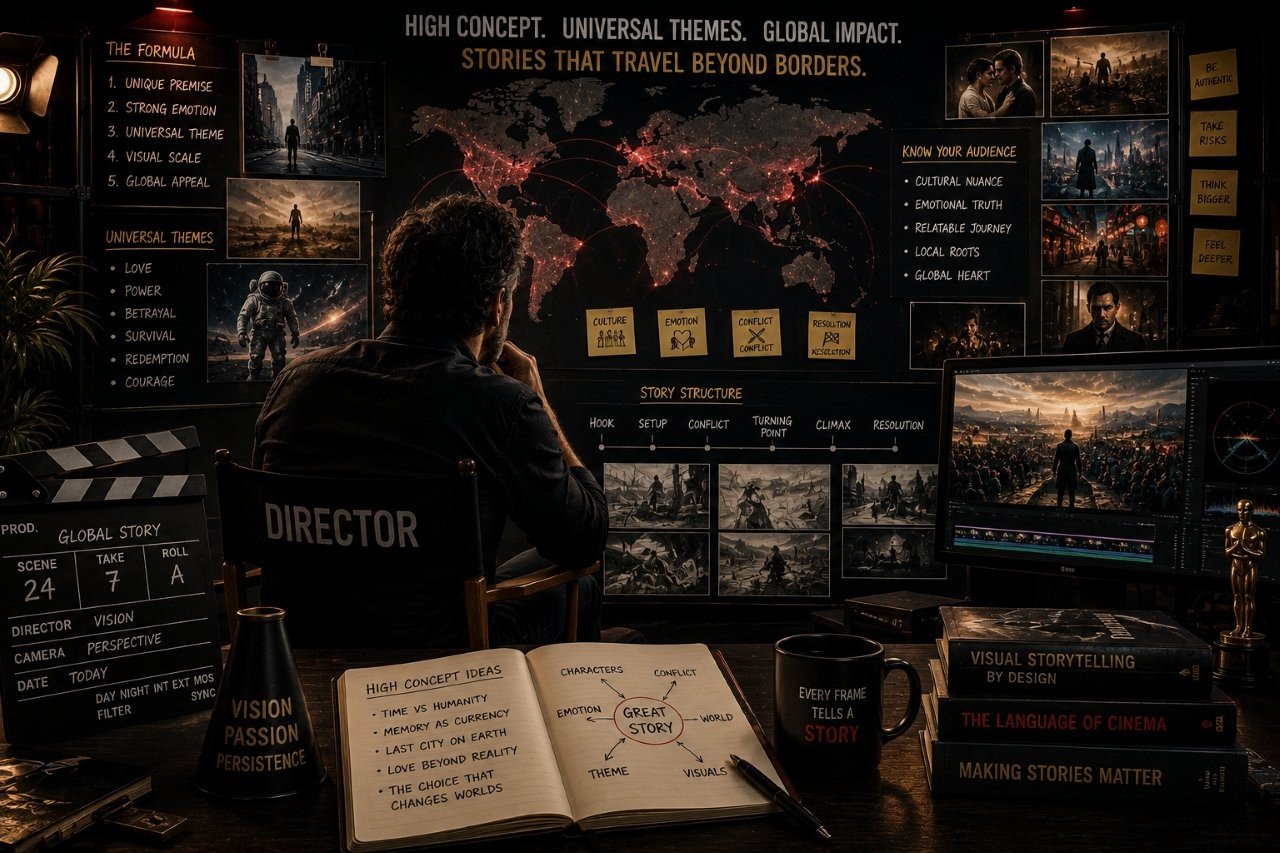
How A List Directors Master High Concept Storytelling for Global Audiences
Creating a cinematic masterpiece that resonates across diverse cultural boundaries is one of the most challenging achievements in modern Hollywood. In 2026, top-tier filmmakers are navigating an increasingly interconnected global box office where complex, localized narratives often get lost in translation. To capture international audiences, visionaries are turning to the art of high-concept storytelling—delivering bold, instantly understandable hooks anchored by universal human themes.
High-concept cinema relies on a clear narrative premise that can be summarized in a single compelling sentence, yet offers infinite depth for character exploration and visual spectacle. Here is an in-depth analysis of how A-list directors craft universal cinematic experiences that dominate global theaters and streaming charts alike.
The Core Mechanics of a Global High-Concept Hook
At its heart, high-concept filmmaking strips away convoluted lore in favor of an immediate, high-stakes question. Directors build these premises on relatable core emotions—survival, love, ambition, loss, and moral conflict—ensuring that the underlying motivation translates effortlessly across languages and cultural contexts.
Key Elements of Universal High-Concept Premises
- The Elevator Pitch Clarity: The central conflict is so striking and simple that any audience member immediately understands the emotional stakes.
- Universal Emotional Anchors: Beneath extravagant sci-fi, fantasy, or action elements lie fundamental human relationships that resonate internationally.
- Visually Driven Storytelling: Relying on visual metaphor and cinematic action reduces dependence on dense dialogue, making the movie accessible to non-native language viewers.
Industry analysis featured on The Hollywood Reporter showcases how high-concept original films regularly outpace complex franchise entries in international territory returns.
Visual World-Building and Spectacle Over Dialogue
A-list directors recognize that motion pictures are, above all, a visual medium. While snappy dialogue and intricate regional humor may miss the mark in foreign dubbed or subtitled releases, stunning visual composition and visceral sequences command universal fascination.
Techniques for International Visual Resonance
- Iconic Visual Motifs: Filmmakers employ distinct color palettes, symbolic props, and striking landscapes to communicate narrative changes without relying on exposition.
- Real-Time Physical Tension: Incorporating ticking-clock scenarios or survival elements creates immediate suspense that transcends language barriers.
- Immersive Audio & Scale: Utilizing cutting-edge sound design and large-format IMAX cinematography ensures that viewing the film in theaters remains an irreplaceable global experience.
Filmmaking coverage on Variety emphasizes how top directors leverage immersive cinema formats to build shared worldwide theatrical events.
Balancing Artistic Vision with Commercial Accessibility
The true genius of an A-list director lies in maintaining artistic integrity while delivering broad commercial appeal. High-concept cinema is often misunderstood as superficial; however, the best directors use a accessible exterior premise as a Trojan horse to explore complex philosophical, psychological, or social commentary.
Why Studios Invest in Master Directors
- Proven Executive Track Record: Top directors bring built-in brand authority, reassuring studios that large budgets will be managed with precision.
- Auteur Signature Style: Audiences around the world buy tickets not just for the premise, but to experience a specific director’s visual voice and creative perspective.
- Long-Term Cultural Longevity: Well-crafted high-concept movies become enduring pop culture classics, generating revenue through licensing and physical media for decades.
The Future of High-Concept Cinema Across Global Platforms
As streaming platforms and theatrical exhibition continue to merge global audiences into a single digital marketplace, high-concept storytelling will remain Hollywood’s most powerful tool. Directors who can balance innovative visual world-building with universally understood human struggles will continue to lead the film industry into its next golden age.
By focusing on strong core ideas, striking visual execution, and deeply emotional character journeys, master filmmakers ensure that great cinema remains a universal language spoken and loved in every corner of the world.