
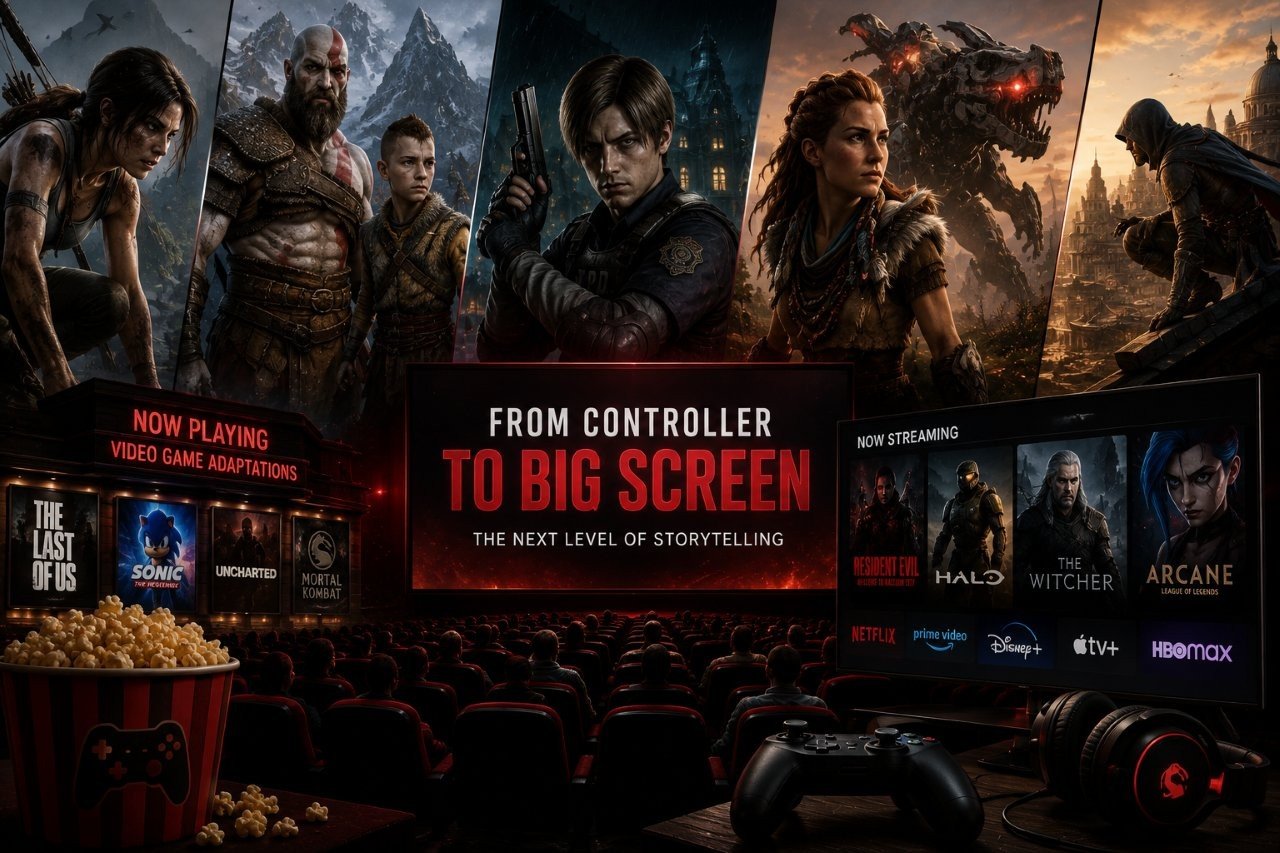
The Rise of Video Game Adaptations Releasing in Theaters and Streaming
For decades, video game movies were viewed in Hollywood as risky commercial ventures often plagued by poor critical reception and weak box office performance. However, entertainment media dynamics have drastically shifted. Today, interactive gaming intellectual properties have surpassed comic book superheroes as the premier source material for blockbuster cinema and global streaming television platforms.
Driven by mature narrative storytelling, massive built-in global fanbases, and creative partnerships between game studios and visionary directors, video game adaptations are setting international box office records. Here is an in-depth analysis of how video game adaptations became mainstream hits across theaters and streaming platforms in 2026 and beyond.
Why Video Game IPs Replaced Traditional Superheroes
The global shift toward gaming adaptations stems from structural changes in how younger audiences consume entertainment. Video games have evolved from arcade novelties into rich, immersive worlds featuring complex narrative character arcs, cinematic world-building, and passionate global fan communities.
Factors Driving the Gaming Adaptation Boom
- Generational Loyalty: Millions of modern moviegoers grew up playing iconic gaming franchises, establishing decades of emotional attachment to characters and lore.
- Deep Narrative Foundations: Modern game titles offer hundreds of hours of expansive world-building, providing writers with rich material for multi-season streaming shows.
- Built-In Global Audiences: Popular gaming properties possess established global fanbases, significantly reducing initial marketing risks for film studios.
Entertainment market reports published by IGN show how global gaming adaptations are delivering consistent multi-hundred-million-dollar box office results and record streaming viewership numbers.
Respecting Lore and Partnering With Game Creators
In early eras of Hollywood filmmaking, production studios frequently ignored core game lore, altering characters and plotlines to fit generic action movie formulas. The current golden age of video game adaptations succeeds precisely because studios are prioritizing faithful lore execution and direct creative collaboration with original game developers.
Key Creative Blueprint Changes
- Executive Developer Oversight: Game creators and studio leaders now hold active executive producer roles, ensuring narrative fidelity across film and television scripts.
- High-Quality Character Casting: Top-tier Hollywood actors now view video game roles as prestigious career milestones rather than secondary voice gigs.
- Cinematic Visual Effects Integration: Advanced rendering tools allow VFX studios to translate iconic game environments and action sequences smoothly onto silver screens.
Industry updates from Variety emphasize how studio collaborations with gaming publishers have established a new standard for authentic cinematic storytelling.
The Dual Model Theaters vs Streaming Distribution
The success of video game adaptations relies heavily on strategically matching specific gaming genres with the ideal distribution platform. High-octane family properties thrive in global theaters, whereas long-form story games find massive success on episodic streaming services.
Matching Gaming Genres with Distribution Platforms
- Family Spectacle in Theaters: Fast-paced animated franchises and multiplayer action games deliver huge theatrical ticket sales by targeting family audiences.
- Prestige Drama on Streaming: Story-driven, post-apocalyptic, and open-world role-playing games excel as multi-season streaming series where character arcs have time to breathe.
- Cross-Platform Synergy: Major adaptations consistently drive massive sales spikes back to original video games as viewers jump online to play the stories they watched.
The Future Horizon for Interactive Media Adaptations
As major entertainment studios secure rights to iconic gaming franchises, the line between interactive digital entertainment and traditional cinema will continue to blur. Upcoming live-action and animated adaptations are adopting cinematic techniques directly inspired by game cameras, creating a seamless visual language for modern moviegoers.
The rise of video game adaptations represents a permanent evolution in Hollywood’s creative pipeline. By respecting original source material, honoring global fanbases, and delivering top-tier cinematic quality, video game adaptations are positioned to dominate global entertainment for generations to come.