Anthony Michael Hall Explains Why He Turned Down John Hughes Films and What Happened With John Hughes
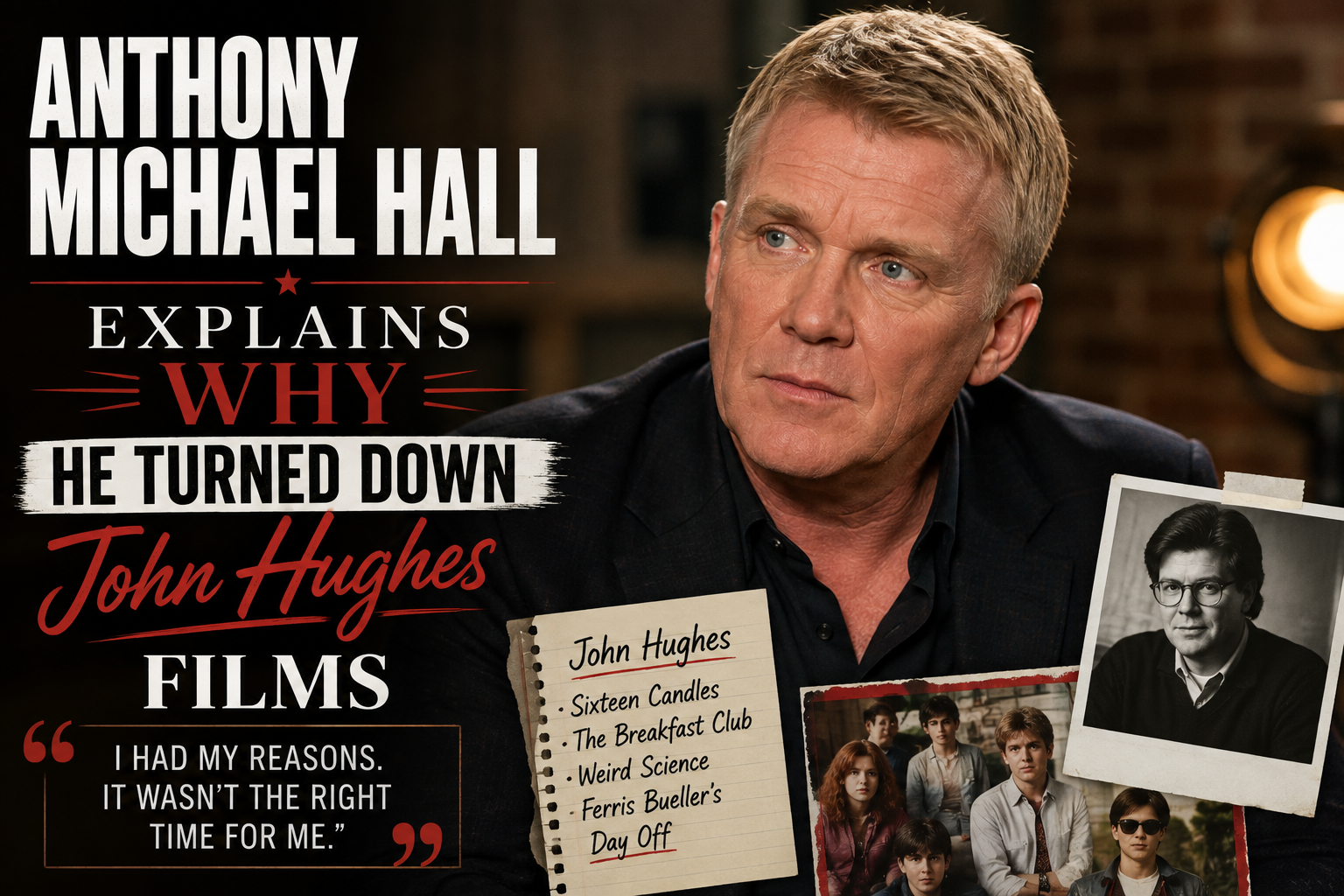
Anthony Michael Hall has opened up about a major turning point in his 1980s career: his decision to pass on roles in Ferris Bueller’s Day Off and Pretty in Pink. Looking back, Hall said he wanted to move beyond the type of teen characters that had quickly become associated with him.
The choice helped shape the next stage of his career, but it also affected his close friendship with filmmaker John Hughes. In a recent appearance on Danielle Fishel’s Teen Beat podcast, Hall said he believes Hughes was hurt by his decision, leading to a long period of distance between them.
Why Anthony Michael Hall Turned Down Ferris Bueller’s Day Off
Hall’s relationship with Hughes had already become an important part of his young career. He had worked with the filmmaker on several successful projects, including Sixteen Candles, The Breakfast Club and Weird Science. He had also played Rusty Griswold in National Lampoon’s Vacation.
However, Hall wanted to avoid becoming trapped in one particular screen persona.
During the Teen Beat conversation, he explained that concerns about stereotyping were already influencing his decisions as a young actor. He felt it was important to explore different opportunities rather than repeatedly play similar characters.
That decision became especially significant with Ferris Bueller’s Day Off. According to Hall, Hughes had written the role of Ferris with him in mind. The part ultimately went to Matthew Broderick, who became closely identified with the character.
Hall has previously explained that his decision was also connected to other professional commitments. On his official website, he says he was trying to avoid typecasting when he declined both Hughes projects.
Why Hall Passed on Pretty in Pink
Hall had a different concern about Pretty in Pink. From his perspective at the time, the story felt too close to the kind of material he had already made with Hughes.
He felt the project could resemble his earlier work rather than give him the creative change he was looking for. Hall ultimately chose not to make the film.
Pretty in Pink was released in 1986 and starred Molly Ringwald as Andie Walsh, with Andrew McCarthy and Jon Cryer among the supporting cast. Hughes wrote and produced the film, while Howard Deutch directed it.
Looking back decades later, Hall does not appear to hold resentment toward the people involved. Instead, he has expressed respect for the film and its cast while emphasising that he simply made a different career choice.
Hall Says His Decision Hurt John Hughes
The professional decision had personal consequences.
Hall said Hughes was sensitive and that he did not fully understand at the time how deeply his decision might affect their relationship. According to Hall, their friendship experienced a “rupture” that lasted for years.
That history has also been discussed in earlier interviews. In 2024, Hall told The Guardian that he had wanted to try different kinds of work after making several films with Hughes. He said he regretted the effect his decision had on Hughes, rather than regretting the desire to expand his career.
Despite the difficult period, Hall has consistently credited Hughes with playing a major role in launching his career.
On his official biography, Hall describes Hughes as a key figure who gave him opportunities early in life and helped establish him as an actor.
Leaving the Hughes Formula Opened Another Door
Hall’s decision to move in a different direction soon coincided with one of the biggest opportunities of his early career.
In 1985, at only 17, he joined Saturday Night Live. He became the youngest cast member in the show’s history at the time. His tenure lasted through the 1985–86 season.
The experience was dramatically different from making a scripted teen movie. Hall later described the SNL schedule as demanding, with writing sessions, rehearsals, read-throughs and live performances packed into each week.
That move also gave Hall a chance to demonstrate a different side of his abilities. Instead of remaining primarily associated with the young characters he had played in Hughes’ films, he entered the fast-paced world of live sketch comedy.
Anthony Michael Hall Still Credits John Hughes for His Career
Although Hall’s relationship with Hughes became strained, his appreciation for the filmmaker has remained clear.
Hall has repeatedly acknowledged how important Hughes was during his formative years. His early collaborations with the director helped establish him as one of the recognisable young actors of 1980s American cinema.
His story also highlights a difficult reality for young performers: the opportunity that makes someone famous can sometimes become the very image they need to escape.
For Hall, turning down two major Hughes films came with professional and personal risks. Yet it also allowed him to pursue a broader career, including Saturday Night Live and later projects such as Edward Scissorhands, The Dead Zone and The Dark Knight.
What Anthony Michael Hall’s Career Decision Says About Typecasting
Hall’s experience remains relevant because typecasting can become a serious challenge for actors who achieve fame through a recognisable role or genre.
His early Hughes films established a clear identity for him. Rather than continue repeating that formula, Hall chose to test himself elsewhere.
In hindsight, the decision had consequences. It contributed to a long period of distance from Hughes. However, Hall has also made clear that his intention was professional growth, not rejection of the filmmaker who helped launch his career.
That distinction is central to Hall’s reflections today. He can recognise the importance of Hughes in his life while also acknowledging that he needed to make his own choices as a young actor.